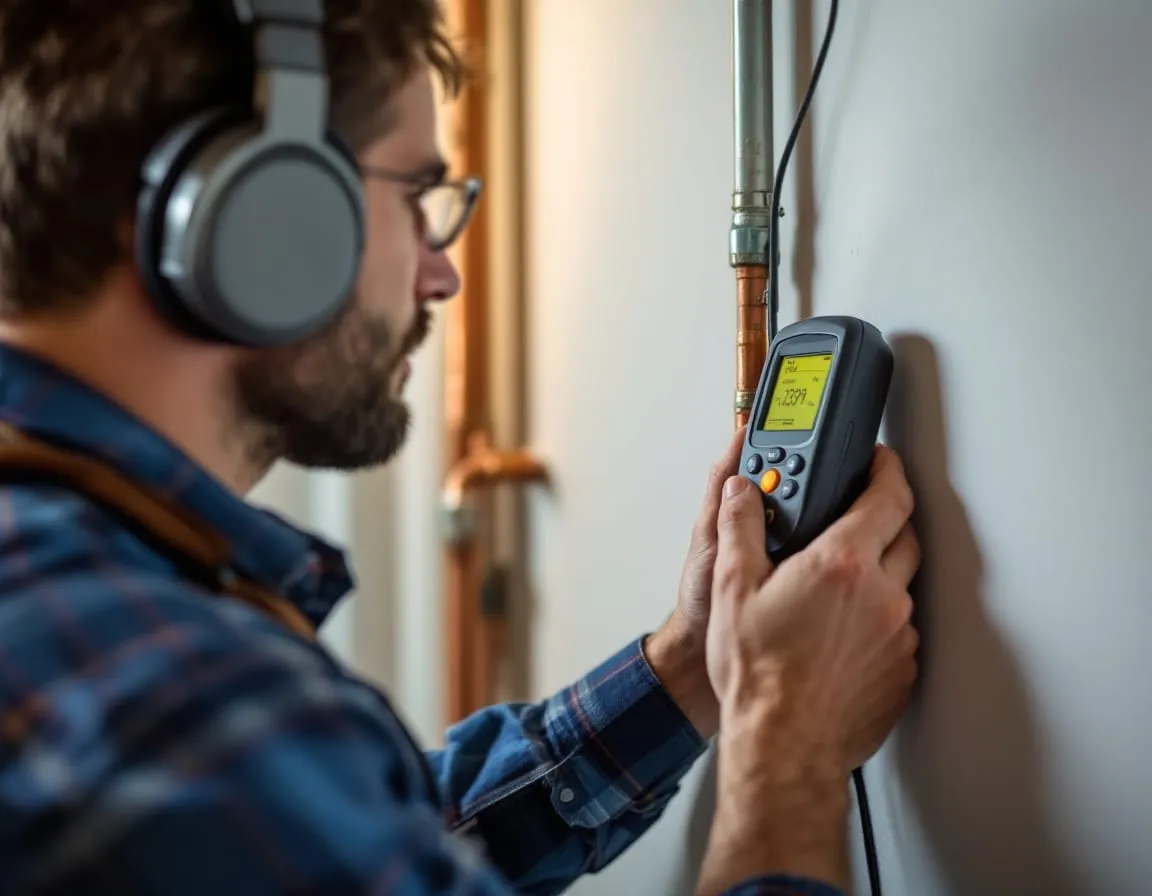
Listening equipment picks up the sound a leak makes traveling along a pipe, and a technician trained to read that signal can follow it to the loudest point without opening anything first.
A pressure test on an isolated section of line adds a second data point, confirming whether the loss is on the supply side or somewhere in the drain, which changes what the repair actually looks like.
Eventually the leak does need a real access point to fix, but the search happens first, which is the difference between one deliberate opening and a wall taken apart on a guess.
On a slab home specifically, that search often starts near the meter and works inward, narrowing the section of line most likely involved before any listening equipment even goes down. It is a slower first step than guessing, but it is the reason most detection visits end with one opening instead of several unnecessary ones.