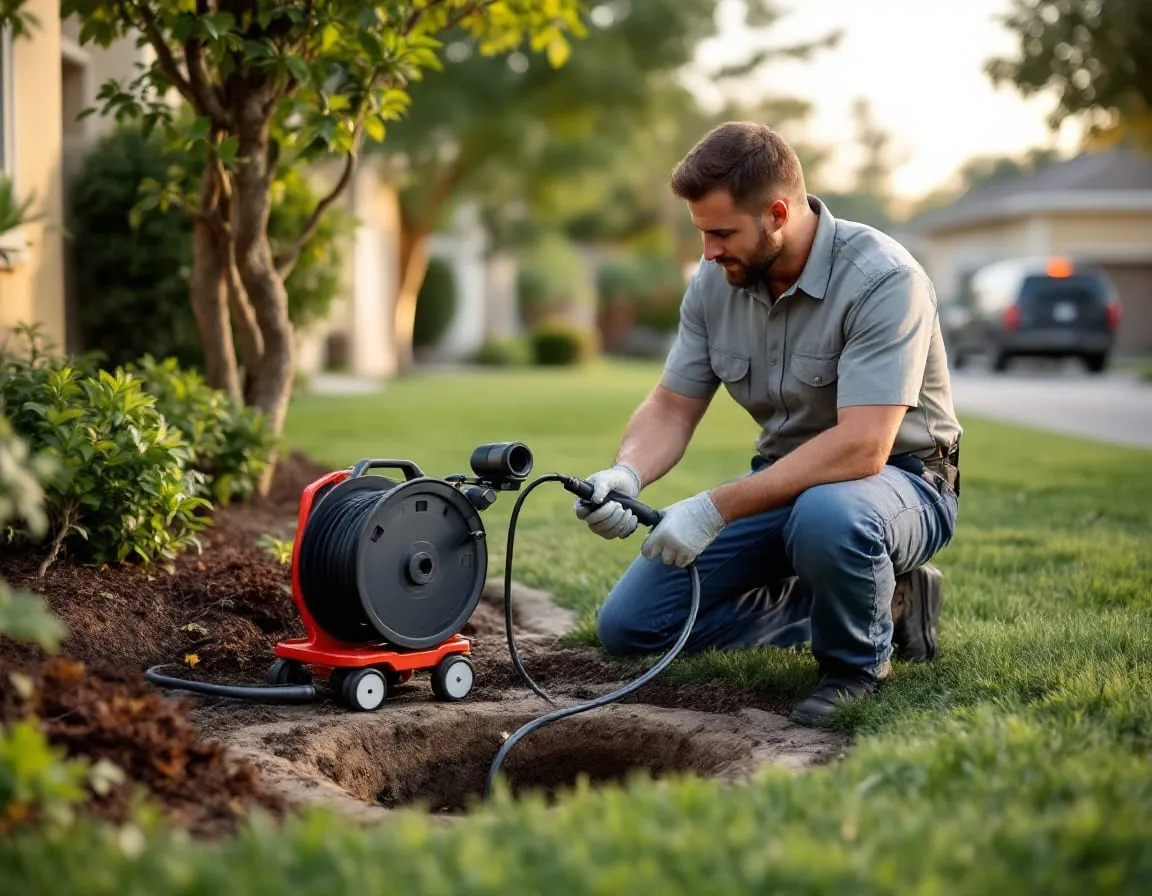
How does a plumber decide between digging up a sewer line and repairing it trenchless?
The camera inspection is what decides it. A trenchless method works by lining or bursting the existing pipe from the inside, which needs the old line to be roughly intact and reachable from an access point at each end.
A line that has partially collapsed, shifted at a joint, or has a bend a liner cannot navigate usually calls for a traditional dig instead, because trenchless methods depend on a path that still resembles a pipe.
Cost, timeline and the state of the yard above the line all factor into which option makes sense once the camera has shown what is actually happening underground, and that gets explained before either method starts.
Neither option is treated as the automatic default. A shorter, more accessible run with straightforward damage can sometimes be dug faster and for less than a trenchless setup would cost, and that comparison gets laid out honestly rather than steered toward the more involved method.